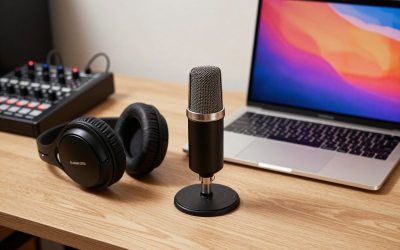
Recording vocals with a USB condenser mic has become genuinely viable for home studios — you no longer need a full XLR chain with a mixer and audio interface to get a usable vocal take. The best USB condenser mics now rival entry-level XLR setups in sound quality while keeping the “plug into your computer and go” simplicity that makes home recording approachable.
For vocals specifically, prioritize a cardioid pickup pattern (focuses on sound from directly in front, rejecting room noise from the sides), a pop filter or at least a built-in foam windscreen, and zero-latency monitoring through a headphone jack on the mic itself so you can hear yourself in real time without digital lag.
Room treatment matters as much as the microphone for vocal recording, arguably more so at this price range. A condenser mic is sensitive by design, which means it picks up room reflections, HVAC hum, and outside noise more readily than a dynamic mic would. Even basic treatment — a closet full of clothes, moving blankets hung on a wall, or a dedicated reflection filter — will noticeably improve any of the microphones below.
Shure MV7+
The most versatile pick on this list, offering both USB and XLR connectivity in one microphone. That means you can start recording vocals today over USB and later upgrade to a full XLR interface setup without replacing the mic — a meaningful advantage for anyone who expects their home studio to grow.
Blue Yeti
The best-selling condenser microphone on Amazon, with over 56,000 reviews — arguably the most popular USB mic ever made. Its four selectable pickup patterns (cardioid, bidirectional, omnidirectional, stereo) make it adaptable well beyond solo vocals, covering group vocal takes, podcasting, and even ASMR-style recording.
Rode NT-USB
A competitively priced USB condenser that punches above its price class, with zero-latency monitoring that makes it genuinely useful for tracking vocals and instruments to a high standard — not just casual voice recording. It’s a favorite for home producers who want studio-adjacent quality without a studio-sized budget.
Audio-Technica AT2020USB-X
Frequently listed as the “best USB condenser” pick in dedicated roundups, the AT2020USB-X builds on Audio-Technica’s well-regarded AT2020 capsule with USB convenience added, delivering clean, accurate vocal reproduction that’s a step up from entry-level gaming-oriented mics.
MAONO A04 Gen2
A versatile and budget-friendly condenser that offers both USB and XLR connectivity, similar in concept to the pricier Shure MV7+ but at a fraction of the cost. It’s a reasonable entry point for singers and voice-over artists who want hybrid flexibility without the premium price tag.
FIFINE T669 / K669B (Budget pick)
For the tightest budgets, these FIFINE condensers deliver solid sound quality for the price, with a cardioid capsule that captures decent warmth and clarity for casual vocal recording and streaming, even if they won’t compete with the pricier picks on this list for studio-grade fidelity.
Elgato Wave:3
Elgato’s Wave:3 pairs a clean-sounding cardioid condenser capsule with proprietary Wave Link mixing software, giving vocalists and streamers more control over their input levels than a typical USB mic’s companion app. It is a common recommendation for anyone who wants both solid vocal capture and flexible software-side mixing in one package.
Rode NT-USB Mini
Rode’s NT-USB Mini condenses the brand’s studio mic reputation into a compact, desk-friendly USB condenser with a built-in pop shield and zero-latency monitoring output. For vocalists recording at a desk setup rather than a full booth, it is a frequently recommended step up from entry-level USB mics without the price jump to full studio XLR setups.
Room treatment affects a USB condenser mic’s vocal recordings more than the mic itself in a lot of home setups. Condenser capsules are more sensitive to room reflections than dynamic mics, so even a basic reflection filter or recording in a smaller, furnished room (more soft surfaces to absorb sound) can noticeably improve vocal clarity before you spend more money upgrading the microphone itself.
If you want room to grow into a full studio setup, the Shure MV7+ or MAONO A04 Gen2’s USB/XLR flexibility make the most sense. For pure vocal quality right now, the Rode NT-USB and Audio-Technica AT2020USB-X are top picks, while the Blue Yeti remains the safest all-around choice thanks to its multiple pickup patterns and massive user base.
Finally, a pop filter is a near-mandatory accessory for any of these mics when recording vocals specifically — plosive sounds from “p” and “b” consonants will create distracting low-frequency pops on a condenser capsule without one, and a basic pop filter costs a fraction of the microphone itself while solving the problem completely.
FAQ
Is a condenser or dynamic USB mic better for vocals?
Condenser mics (most on this list) capture more detail and are generally preferred for vocals in treated or quiet rooms, while dynamic mics like the Shure MV7+ handle untreated or noisier rooms better since they are less sensitive to ambient sound and room echo.
Do I need separate pop filter if the mic already has a built-in one?
Built-in pop shields, like on the Rode NT-USB Mini, reduce plosives somewhat but an external pop filter placed a few inches from the capsule generally performs better for close-mic vocal recording, so many vocalists use both together.


Write Your Review
No reviews yet. Be the first to share your experience!