Every new vlogger eventually asks the same question: do I need a gimbal or a tripod first? They solve different problems, and it’s worth understanding exactly how before you spend money on either one. A gimbal keeps your footage smooth while you’re walking or moving through a scene, using motors to cancel out the natural bounce of your steps. A tripod keeps your camera perfectly still for interviews, talking-head shots, or any setup where you’re standing in one place rather than moving. Most creators end up owning both eventually, but if you can only buy one right now, here’s how to decide — plus the specific models worth your money.
Think about the last few videos you watched in your niche and ask which shot type they relied on more. Walking-tour vlogs, room transformations, and “day in the life” content lean heavily on gimbal-smoothed movement. Interview-style content, product reviews, and desk-based tutorials lean almost entirely on a static tripod shot. Most channels are a mix, but one usually dominates — and that’s the gear you should buy first.
DJI Osmo Mobile 7 (Best Gimbal Pick)
The Osmo Mobile 7 is DJI’s current smartphone gimbal, and it remains the easiest way to get cinema-smooth walking and running shots without any editing-software stabilization tricks. It uses a 3-axis motorized system to cancel out hand shake, has an extendable rod for selfie-style vlogging angles, and a magnetic phone clamp that lets you snap your phone on and off in seconds instead of fiddling with a spring clip.
Pros: genuinely smooth moving shots, quick magnetic mounting, gesture and app-based tracking modes. Cons: adds a second device to carry and charge; overkill if you rarely move while filming.
Zhiyun Smooth Q4 (Budget Gimbal Alternative)
If the DJI price tag is more than you want to spend on a first gimbal, the Zhiyun Smooth Q4 folds down small enough to fit in a jacket pocket and still delivers solid 3-axis stabilization for walk-and-talk vlogging. It’s not as polished as DJI’s app ecosystem, but the core stabilization performance is close enough that most viewers won’t notice the difference in the final footage.
Pros: noticeably cheaper than DJI, ultra-compact folding design, easy one-handed operation. Cons: companion app and tracking features are less refined than DJI’s.
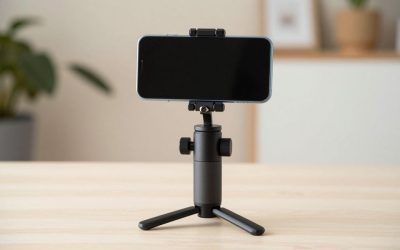
JOBY GorillaPod 3K Kit (Best Tripod Pick)
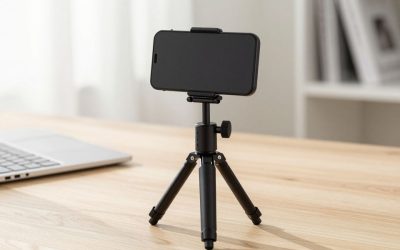
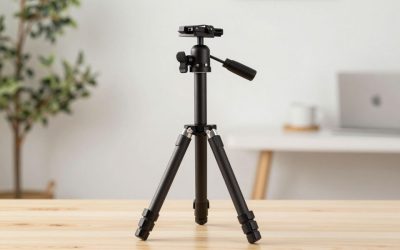
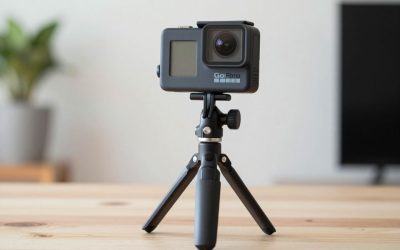
For anything where you’re standing still — a desk setup, an interview, a tripod wedged on an uneven rock during a hike — the GorillaPod 3K is the more useful tool. Its flexible wrap-around legs let you mount a camera on a railing, a tree branch, or a bike frame, not just flat ground, and the included ballhead supports up to 3kg, enough for a mirrorless camera with a lens attached.
Pros: mounts almost anywhere thanks to flexible legs, solid build quality, works for phones and real cameras alike. Cons: not motorized, so it does nothing for moving shots.
How to choose: if your content is mostly walking tours, room transformations, or any “camera moves with me” format, buy the gimbal first — no tripod can fake that smoothness, and trying to hand-hold that kind of footage without one almost always looks shaky and amateurish by comparison. If your content is mostly sit-down talking, product reviews filmed from one angle, or overhead desk shots, the tripod solves 90% of your problem for a fraction of the price, and a gimbal would mostly sit in a drawer unused.
Vloggers who do both formats eventually buy a compact tripod anyway, since even gimbal-shot footage often needs a few static shots mixed in for pacing — a gimbal alone tends to produce visually exhausting video if every single shot is in motion. Budget permitting, a reasonable upgrade path is: tripod first, budget gimbal second, premium gimbal only once you know moving shots are a core part of your format rather than an occasional nice-to-have.
FAQ
Can a gimbal replace a tripod entirely?
Not really — most gimbals can be set on a flat surface in a pinch, but they lack the height adjustment, flexible mounting, and stability of a dedicated tripod for static shots, and running the motors continuously just to hold a static shot wastes battery for no benefit.
Which one should a complete beginner buy first?
A tripod, in most cases — it’s cheaper, there’s no learning curve, and it covers the single most common vlogging shot: you, sitting or standing, talking to the camera.
Do gimbals work with regular cameras, not just phones?
Smartphone gimbals like these two are built specifically for phones; larger camera gimbals exist for mirrorless and DSLR bodies but cost significantly more and weigh much more too, so they’re a separate purchase decision entirely.
How long does it take to get comfortable operating a gimbal?
Basic smooth walking shots feel natural within the first short session, but advanced moves like reveals or tracking shots usually take a few weeks of casual practice before they look intentional rather than accidental.
Write Your Review
No reviews yet. Be the first to share your experience!