A clip-on lavalier mic is one of the single biggest audio upgrades a vlogger can make, since it sits close to your mouth regardless of how far you are from the camera — and proximity to the sound source matters more for clarity than almost any other factor. The question is whether you need a wireless system or a simple wired clip-on. The two options below sit at opposite ends of that spectrum, and both are genuinely good at what they do, just for different situations.
It helps to be honest about how you actually film before choosing. If you’re consistently within arm’s reach of your camera — sitting at a desk, standing behind a counter for cooking content, filming a seated interview — a wired mic covers you completely for a fraction of the cost. If you regularly move further than a cable would reasonably allow, wireless stops being a luxury and starts being the thing that determines whether your audio is usable at all.
BOYA BY-M1 (Budget Pick)
The BY-M1 has been a go-to budget lav mic for years for a simple reason: it’s a basic 3.5mm wired clip-on microphone that costs less than a fast-food meal and still produces noticeably clearer audio than a built-in camera mic. There’s no wireless freedom here — you’re tethered by a roughly 20-foot cable — but for seated interviews, desk recording, or any setup where you’re not moving far from the camera, it does the core job well.
Pros: extremely low cost, simple plug-and-record setup, works with cameras, phones, and recorders that accept a 3.5mm mic input. Cons: wired cable limits movement; no wireless freedom for walk-and-talk content.
DJI Mic 2 (Premium Pick)
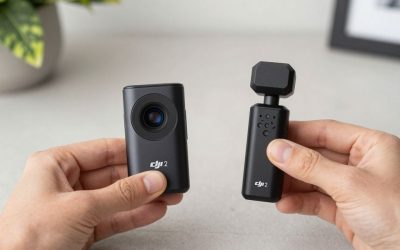
DJI Mic 2 is technically a wireless lavalier system rather than a single clip-on mic, but it solves the exact same “mic close to my mouth” problem while adding full wireless freedom, a touchscreen receiver, and 32-bit float recording as backup against clipped audio. It’s a completely different category of tool than a wired clip-on, and the price difference reflects that.
Pros: true wireless freedom up to 250 meters, professional-grade recording safety net, works for two speakers at once. Cons: costs many times more than a basic wired lav; overkill for a stationary desk setup.
Rode Wireless GO II (Mid-Range Pick)
Between the BOYA’s wired simplicity and DJI Mic 2’s full feature set sits Rode Wireless GO II — genuine wireless freedom without DJI’s touchscreen receiver or 32-bit float recording, at a price closer to the middle of the range. It’s the pick for someone who’s decided they definitely need wireless but doesn’t want to pay for features aimed at run-and-gun video production specifically.
Pros: true wireless movement at a lower cost than DJI’s system, onboard transmitter recording as a backup, compact and easy to clip on. Cons: lacks the touchscreen feedback and recording safety net that make DJI Mic 2 more forgiving for beginners.
It’s also worth thinking about how many people you’ll ever need to mic at once. A single BOYA BY-M1 only covers one speaker, and buying a second one means running two separate cables into a dual-input adapter if your camera even supports that. Both DJI Mic 2 and Rode Wireless GO II ship with two transmitters as standard, so a two-person interview is handled out of the box without any extra hardware or adapters — a detail that often tips the decision toward wireless even for otherwise stationary content.
Who should buy which: if you’re filming seated content, reviews at a desk, or anything where you stay within a few feet of the camera, the BOYA BY-M1 gets you most of the audio-quality benefit for almost nothing, and spending more wouldn’t meaningfully improve that specific use case. If your content involves walking, moving around a room, or filming from a distance — cooking videos, workout content, product demos where you’re not glued to one spot — the wireless freedom of DJI Mic 2 isn’t a luxury, it’s the feature that actually makes the footage usable in the first place.
A common beginner mistake is buying the cheap wired option for a format that actually needs wireless, then feeling the cable limitation constantly and eventually buying the wireless system anyway — effectively paying for both. If you already know your format involves movement, it’s usually cheaper in the long run to buy the wireless system once rather than “upgrading into it” later.
FAQ
Does a cheap wired lav mic really sound noticeably better than a camera’s built-in mic?
Yes, almost always — proximity to the mouth matters more than the mic’s price tag, and even a basic clip-on sitting a foot from your mouth will out-perform a built-in mic several feet away.
Can I add wireless freedom to a wired lav mic later?
Some wireless transmitter packs accept a 3.5mm mic input, letting you pair a wired lav with a separate wireless transmitter, but it’s usually simpler and not much more expensive to buy an all-in-one wireless system instead.
Is there a middle-ground option between these two?
Rode Wireless GO II sits closer to the middle — wireless like DJI Mic 2 but with a simpler feature set and typically a lower price than DJI’s touchscreen system.
How much does mic clip placement on clothing actually matter?
Quite a bit — clipping too low, under a jacket, or near fabric that rubs against the mic can introduce muffling or rustling noise regardless of whether the mic itself is budget or premium.
Will either of these work for recording two people at once?
A single wired BOYA mic only covers one speaker at a time, while DJI Mic 2’s two included transmitters make recording two people simultaneously straightforward without buying extra hardware.
Is Rode Wireless GO II a reasonable first wireless mic?
Yes — it covers the core wireless use case well at a lower price than DJI Mic 2, making it a sensible first wireless purchase if you don’t need the touchscreen receiver or 32-bit float recording.
Does battery life differ much between a wired lav and a wireless system?
A wired mic has no battery to manage at all since it draws power from the connected device, while wireless systems need their transmitters and receiver charged between shoots — a small extra step wired users never have to think about.



Write Your Review
No reviews yet. Be the first to share your experience!