Action cameras have one of the widest price gaps in the camera world — a genuinely capable one costs around $100, while a flagship model costs nearly three times that. The question isn’t which one is “better” in a vacuum, it’s whether the premium features actually matter for how you plan to use it, since plenty of casual users would never notice the difference in everyday footage.
The honest way to think about this gap is in terms of forgiveness. A premium sensor and processor handle difficult conditions — low light, fast motion, high contrast scenes — far more gracefully than a budget one. In good, even daylight doing fairly simple activities, the gap narrows considerably, which is exactly why so many casual users are perfectly happy with a budget camera while serious action and sports creators consistently choose to spend more.
AKASO Brave 4 Pro (Budget Pick)
The Brave 4 Pro has become a consistent recommendation in the true budget tier because it does almost everything a more expensive camera does on paper — 4K video at 30fps, a 20-megapixel stills sensor, and genuinely functional electronic image stabilization that smooths out real shake rather than just advertising the feature. For casual use — family trips, light hiking, kids’ sports from the sideline — it covers the basics convincingly.
Pros: very affordable entry point into action cameras, usable 4K footage and stabilization, included accessories for mounting straight out of the box. Cons: low-light performance and dynamic range fall noticeably short of premium sensors; stabilization degrades more in genuinely fast or rough motion.
DJI Osmo Action 6 (Premium Pick)
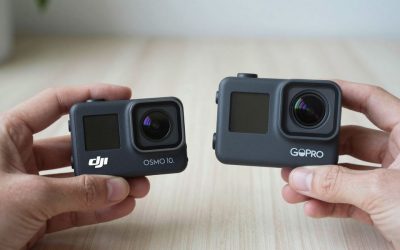
DJI’s current flagship action camera uses a larger square sensor and a variable-aperture lens, producing meaningfully better low-light and dynamic-range performance than budget cameras, with stabilization that holds up even in genuinely rough action — mountain biking, skiing, whitewater. It’s the camera serious outdoor content creators reach for when footage quality actually needs to hold up on a big screen.
Pros: significantly better image quality and dynamic range, stabilization that holds up in demanding action, generous built-in storage. Cons: costs multiple times more than budget alternatives, which is hard to justify for casual or occasional use.
GoPro HERO13 Black (Mid-Tier / Hybrid Pick)
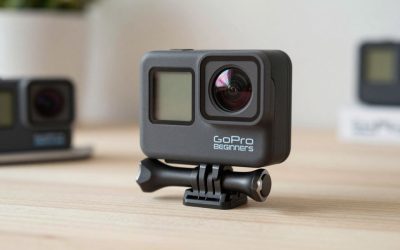
Between true budget and DJI’s current flagship sits GoPro’s HERO13 Black — a step up from the Brave 4 Pro in sensor quality and stabilization, backed by the largest third-party mounting ecosystem in the category, without quite reaching Osmo Action 6 pricing. It’s a reasonable landing spot for creators who’ve outgrown a budget camera’s limitations but aren’t ready to commit to premium pricing, or who specifically need GoPro’s mounting compatibility for existing gear.
Pros: noticeably better image quality than budget cameras, enormous mounting accessory ecosystem, strong stabilization for most action use cases. Cons: still costs meaningfully more than the Brave 4 Pro, and image quality falls short of DJI’s larger-sensor flagship in low light.
Accessory compatibility is worth weighing alongside the camera body itself, especially if you already own mounts from a previous camera. GoPro’s mounting standard is the most widely supported across third-party accessories, so sticking with GoPro (budget or premium tier) avoids rebuying mounts you already have. DJI’s mounting ecosystem has grown but remains smaller, which matters more if you’re mounting to a helmet, bike, or gear rig regularly than if you mostly hand-hold the camera.
Who should buy which: if you’re testing whether action-camera content is something you’ll actually stick with, or your use case is casual and forgiving — family vacations, kids’ activities, occasional hikes — the Brave 4 Pro delivers real value without the premium price. If you’re building a content channel around action sports, filming in genuinely demanding light or motion conditions, or your footage needs to hold up to close scrutiny on a large screen, the gap in image quality between budget and premium sensors becomes obvious fast, and the Osmo Action 6 is worth the jump.
One more practical factor: resale and longevity. A premium action camera tends to hold resale value and stay relevant for longer thanks to ongoing firmware updates, while budget models are often replaced by a newer, similarly-priced model within a year or two, with little resale market for the older one. That’s not a reason to overspend on a hobby you’re not sure you’ll stick with, but it’s worth factoring in if you’re already confident this is a long-term interest.
FAQ
Is the image quality gap between budget and premium action cameras really noticeable?
In good daylight, the gap is smaller than you’d expect; the difference becomes obvious specifically in low light, high-contrast scenes, and fast motion, where cheaper sensors and processors struggle more visibly.
Do budget action cameras actually survive rough use, or is that marketing?
Most budget action cameras, including the Brave 4 Pro, are genuinely waterproof and shock-resistant within their stated limits — the durability claims tend to hold up better than the image-quality claims do.
Is there a reasonable middle-ground action camera between these two?
GoPro and DJI both sell previous-generation flagship models at reduced prices once a new model launches, which often gives a solid middle ground between true budget and current flagship pricing.
Does battery life differ much between budget and premium models?
Premium models generally offer more efficient processors and larger batteries, giving noticeably longer recording time per charge, though both tiers benefit from carrying at least one spare battery for a full day of filming.
Can I use third-party mounts and accessories on either camera?
Most budget and premium action cameras adopt a similar mounting standard to GoPro’s, so a large share of third-party mounts and cases work across brands, though it’s worth checking compatibility for your specific model before buying extras.
Where does GoPro HERO13 Black fit between these two picks?
It sits in the middle on both price and image quality, making it a reasonable option if the Brave 4 Pro feels limiting but the Osmo Action 6’s price is hard to justify right now.
Does it make sense to buy a previous-generation flagship instead of any of these three?
Often yes — once a new flagship launches, the previous generation from GoPro or DJI frequently drops in price while still outperforming true budget cameras, making it worth checking current discounts before deciding.

Write Your Review
No reviews yet. Be the first to share your experience!