For a first dedicated vlogging camera, the priority list should look different than it does for an experienced shooter: simplicity and reliable autofocus matter more than manual controls, and a flip screen for self-monitoring matters more than interchangeable lenses. Beginners also benefit from staying under $500, both to limit risk while still learning what matters to their specific content style, and because the cameras in this price range are specifically designed with vlogging-first features.
Look for a flip-out or fully articulating screen (so you can see yourself while filming), reliable face/eye autofocus (so you don’t need to manually pull focus while talking), and at least a basic external mic input, even if you don’t buy a separate mic right away.
It’s worth resisting the pull toward the most feature-packed camera on a spec sheet when you’re just starting out. A camera with dozens of manual controls you don’t understand yet will often produce worse early videos than a simpler camera that gets autofocus and exposure right automatically, freeing you to focus on content, framing, and talking naturally on camera instead of fighting menus.
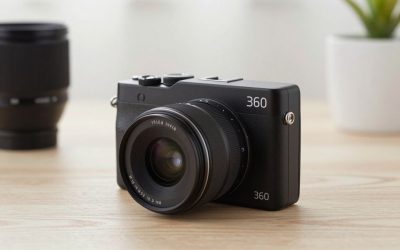
Sony ZV-1F
Described as a masterclass in stripping away what beginners don’t need to focus on what they do — a 20mm f/2.0 lens and reliable Eye-AF make framing and focus nearly automatic. At around $498, it sits right at the top of the beginner budget range but delivers vlogging-specific design throughout.
Canon PowerShot V10
Designed specifically for creators who want simple shooting with reliable image quality, priced around $399-480. Its straightforward controls help keep setup quick, which matters for beginners who want to start filming rather than spend time learning menus.
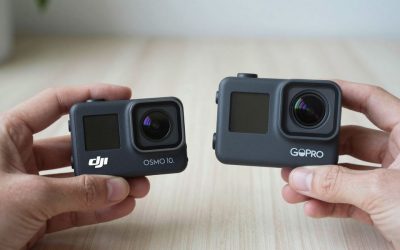
DJI Osmo Pocket 3
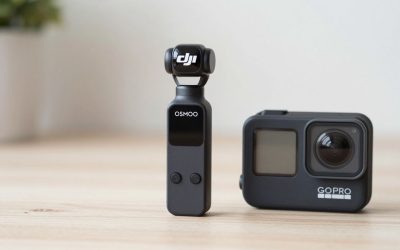
With prices dropping as low as $439, the Osmo Pocket 3’s gimbal stabilization and large one-inch sensor make it forgiving for beginners who haven’t learned stable handheld shooting technique yet — the mechanical gimbal does that work for you, and low-light performance is strong thanks to the larger sensor.
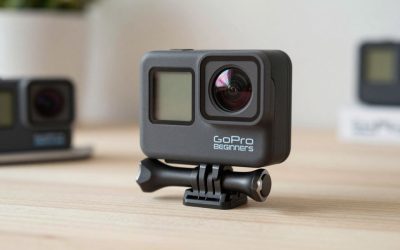
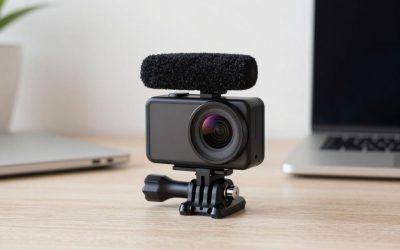
GoPro HERO11 Black
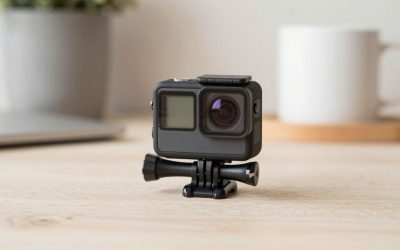
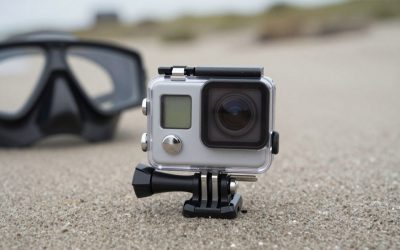
At around $299, it’s often labeled an action camera but works surprisingly well as a first vlogging camera thanks to HyperSmooth 5.0 stabilization that rivals mechanical gimbals for walking and active shooting, plus genuine durability if you’re learning to vlog outdoors or during activities.
Panasonic Lumix G100
Rated well for cinematic-looking vlogging footage with real growth potential — a beginner can start with the kit lens and basic settings, then grow into the camera’s more advanced video features as their skills develop, rather than outgrowing the camera entirely within a few months.
Sony ZV-E10 II
The ZV-E10 II is Sony’s interchangeable-lens step up from the fixed-lens ZV-1F, aimed at beginners who want room to grow into different lenses without immediately jumping to a higher-tier body. It keeps the vlogging-specific autofocus and background-blur button that made the ZV series popular while adding more creative flexibility as skills develop.
Fujifilm X-M5
Fujifilm’s X-M5 brings the brand’s well-regarded color science to a compact, vlogging-oriented body with a fully articulating screen and a dedicated vlog mode. For beginners who want distinctive out-of-camera color (a Fujifilm hallmark) without heavy editing, it is a notable alternative to the more clinical-looking output of some competing beginner cameras.
For true beginners, menu complexity is worth testing in person or via video reviews before buying, not just specs. Some beginner-marketed cameras still bury basic settings (like manual exposure or autofocus mode) several menus deep, which can be genuinely discouraging in the first few weeks of ownership — cameras that surface vlogging-specific settings on a dedicated mode dial or quick menu tend to have a noticeably easier learning curve.
For the simplest possible starting point, the Sony ZV-1F or Canon PowerShot V10 require the least learning curve. If your content is more active or outdoor-focused, the GoPro HERO11 Black or DJI Osmo Pocket 3 forgive shaky handheld technique better than a standard compact camera. And if you want room to grow without replacing your first camera, the Panasonic Lumix G100 offers the most headroom.
Whichever camera you choose first, give yourself a few weeks of regular shooting before deciding it’s “wrong” for you. Most of the frustration new vloggers feel in the first month comes from unfamiliarity with the camera’s menus and autofocus behavior, not from a genuine equipment limitation — and that frustration usually fades well before the camera itself becomes a real bottleneck.
If possible, handle the camera in person or watch unboxing/first-impressions videos before buying — menu layout and button placement vary more between brands than spec sheets suggest, and a camera that feels intuitive in someone else’s hands may still feel awkward in yours. A short adjustment period is normal either way, but starting with a camera whose basic layout makes sense to you will shorten that period considerably.
FAQ
Is a fixed-lens camera easier for a true beginner than an interchangeable-lens one?
Generally yes — fixed-lens cameras like the ZV-1F remove the decision of which lens to buy and keep the kit simpler, while interchangeable-lens cameras offer more long-term flexibility once you know what focal lengths you actually use.
Do beginner vlogging cameras need image stabilization built in, or is a gimbal enough?
Built-in stabilization handles normal handheld movement and walking reasonably well on its own; a gimbal is really only necessary for higher-motion shooting like running or cycling, so it is not a required day-one purchase for most beginners.

Write Your Review
No reviews yet. Be the first to share your experience!