Key takeaways
- Waterproof to roughly 20m / 65ft without a case
- Higher maximum resolution than its predecessor
- Front and rear screens for vlogging-style framing
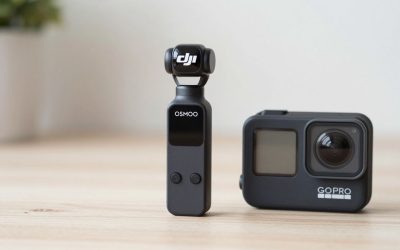
DJI’s Osmo Action line has become a genuine rival to GoPro, with some current reviews now favoring DJI’s latest flagship overall. Here’s how the two brands compare for buyers deciding between them.
Top Picks
DJI Osmo Action 6
DJI’s current flagship action camera, now cited by several 2026 reviews as outperforming GoPro’s HERO13 Black overall, including a notable jump to higher maximum video resolution.
- Waterproof to roughly 20m / 65ft without a case
- Higher maximum resolution than its predecessor
- Front and rear screens for vlogging-style framing
Pros: Deeper native waterproof rating than GoPro’s flagship; Strong low-light performance frequently praised in reviews; Dual-screen design helps with self-framing shots.
Cons: Newer, so accessory ecosystem is smaller than GoPro’s; Price is comparable to or above GoPro’s flagship.
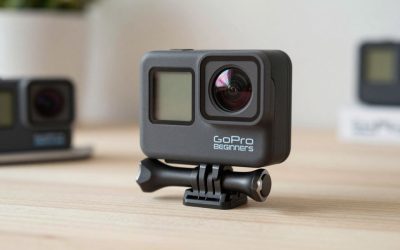
GoPro HERO13 Black
GoPro’s current flagship, still considered the top choice specifically for modular lens flexibility and the most mature mounting ecosystem.
- Waterproof to roughly 10m / 33ft without a case
- Modular front lens system
- Massive third-party mount compatibility
Pros: Unmatched breadth of mounting accessories and housings; Modular lens system adds shooting flexibility DJI doesn’t match; Long track record of firmware support.
Cons: Shallower native waterproof depth than DJI’s current flagship; Reviews increasingly rate it a close second to the Osmo Action 6.
DJI Osmo Action 5 Pro
The previous DJI flagship, now considered one of the best value picks in the category since prices dropped after the Osmo Action 6 launched.
- Waterproof to roughly 20m / 65ft without a case
- Strong stabilization and low-light performance
- Dual-screen design
Pros: Excellent value now that newer DJI/GoPro flagships have launched; Same deep native waterproofing as the newest DJI model; Proven reliability from a full product cycle on the market.
Cons: Lacks the newest sensor/resolution improvements of the Osmo Action 6; Smaller accessory ecosystem than GoPro.
Insta360 Ace Pro 2
Insta360’s Ace Pro 2 enters the direct GoPro-vs-DJI conversation with Leica-co-engineered optics and a flip touchscreen, positioning itself as a genuine third option rather than a budget alternative to the two bigger brands.
- Leica co-engineered lens and color tuning
- Flip touchscreen for selfie framing
- Strong low-light sensor performance
Pros: Distinctive color tuning from Leica collaboration; flip screen is genuinely useful for solo shooters; competitive low-light performance.
Cons: Smaller third-party mount ecosystem than GoPro; newer brand with a shorter track record in this category.
Akaso Brave 7 LE
Including a budget-tier option like Akaso’s Brave 7 LE alongside the flagship DJI and GoPro models highlights just how much of the premium price buys genuinely better stabilization and low-light performance versus a camera that still shoots usable 4K at a fraction of the cost for casual use.
- 4K recording at a budget price point
- Basic electronic stabilization
- GoPro-style mount compatible
Pros: Dramatically lower price than flagship models; still usable 4K footage in good light; standard mount compatibility.
Cons: Stabilization and low-light performance clearly behind GoPro/DJI flagships; less refined companion app.
Buying Tips
- If deep native waterproofing without a housing matters most, DJI’s current and previous-generation Osmo Action models outperform GoPro’s flagship.
- If you want the widest range of third-party mounts, housings, and accessories, GoPro’s ecosystem is still the most mature.
- Buying the previous-generation flagship from either brand (Osmo Action 5 Pro or HERO12 Black) is usually the best value move.
- Check firmware update history for both brands before buying — ongoing software support affects long-term usability.
- Low-light performance varies more between action camera brands than marketing suggests — if you regularly shoot indoors, at dusk, or underwater (where available light drops fast), compare actual sample footage in dim conditions rather than relying on daylight demo clips alone. If your filming happens almost entirely in good daylight, a budget action camera closes much of the quality gap with flagship models — the price premium buys the most value in challenging light and advanced stabilization.
Brand ecosystem lock-in is a real long-term consideration beyond the camera itself. GoPro’s mount compatibility is the most universal, DJI’s cameras integrate tightly with its own drones and gimbals if you already own that gear, and newer entrants like Insta360 are catching up but still have a smaller accessory selection than the two established leaders.
FAQ
Is DJI Osmo Action better than GoPro now?
Several 2026 reviews now rate the DJI Osmo Action 6 above GoPro’s HERO13 Black overall, particularly for resolution and native waterproofing, though GoPro still leads on accessory ecosystem breadth.
Which brand has better mounting accessories?
GoPro has a significantly larger and more mature third-party mount and housing ecosystem due to its longer market presence.
Should I buy the newest flagship from either brand?
Not necessarily — the previous-generation flagship from either DJI or GoPro typically offers excellent value once the newest model has launched and prices adjust.
Does brand loyalty matter if I already own GoPro or DJI mounting accessories?
It can meaningfully affect your decision — switching brands often means replacing mounts and accessories too, so if you have an existing investment in one ecosystem’s mounts, staying within that brand avoids an additional hidden cost beyond the camera itself.
How much of the price gap between flagship and budget action cameras is justified by real-world quality difference?
In good daylight, the gap is smaller than the price difference suggests; the flagship brands pull ahead most noticeably in stabilization smoothness, low-light footage, and app/editing ecosystem polish rather than daylight image quality alone.
For outright image quality and native waterproofing, DJI’s Osmo Action 6 currently edges out GoPro’s HERO13 Black, but GoPro’s mount ecosystem and modular lens system remain real advantages worth weighing against DJI’s gains.

Write Your Review
No reviews yet. Be the first to share your experience!