Standard camera drones are great for wide establishing shots — a slow rise over a landscape, a top-down reveal of a location. FPV (first-person view) drones do something completely different: they let you fly through gaps, swoop low over water, and chase a subject at speed while the camera feels like it’s part of the motion rather than observing it from above. That cinematic, immersive feel is exactly why more vloggers and short-form creators have started adding an FPV drone to their kit alongside a standard camera drone rather than instead of one.
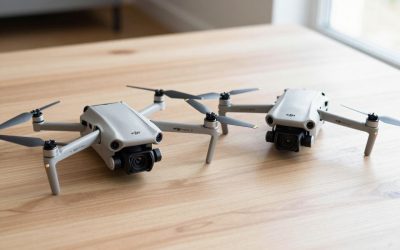
The learning curve is the honest catch. Traditional camera drones like the DJI Mini series are designed to hover in place and fly predictably with minimal input. FPV drones are designed to be flown actively and continuously — let go of the sticks and some models don’t just sit still, they can drift or need to be caught. The models below sit at the more forgiving end of the FPV spectrum specifically because they include beginner-friendly flight modes that make the format approachable without a racing-drone learning curve.
DJI Avata 2 (Best Overall)
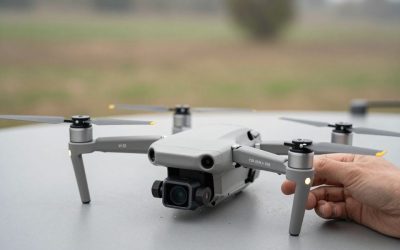
The Avata 2 is the current standard recommendation for creators who want FPV-style footage without an FPV pilot’s reflexes. It ships with goggles and a motion controller as part of the standard kit, and includes a beginner/normal flight mode that caps speed and adds a return-to-hover safety behavior if you let go of the controls — something true racing FPV drones don’t offer at all. The camera shoots stabilized 4K/60fps with a wide field of view that gives footage that immersive, flying-through-the-scene look.
Pros: genuinely approachable for FPV beginners thanks to safety modes, strong 4K image quality, goggles included rather than sold separately. Cons: propeller guards are a separate purchase and genuinely worth adding for the first few flights; goggles mean you can’t easily have a second person watch the live feed without extra hardware.
DJI Avata 2 Propeller Guard (Essential Add-On)
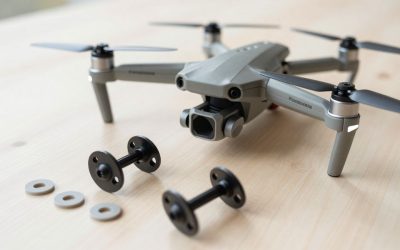
Unlike the enclosed-prop original Avata, the Avata 2 has exposed propellers, which makes a propeller guard a near-mandatory first purchase rather than an optional accessory — both for your drone’s survival during early flights and for safety around people or pets. It clips on without tools and adds minimal weight.
Pros: dramatically reduces damage from beginner crashes into walls or branches, quick tool-free installation. Cons: adds a small amount of drag that can slightly reduce flight time.
HOVERAir X1 (Simplest Alternative, No Goggles Required)
For creators who want dynamic, dynamic-feeling follow shots without learning to fly FPV at all, the HOVERAir X1 is a self-flying camera that launches from your hand and autonomously tracks and follows a subject using onboard AI, no goggles or sticks required. It’s not a true FPV drone — there’s no manual acrobatic flying — but it produces similarly dynamic chase and orbit shots with essentially zero flying skill needed.
Pros: fully autonomous subject tracking, no goggles or flying skill required, very fast to launch and start filming. Cons: far less creative control than actually flying; footage style is more limited to its preset follow/orbit patterns.
How to choose: if you want the real FPV look — fast, immersive, flying-through-gaps footage — and you’re willing to spend a few sessions practicing in an open field before filming anything important, the Avata 2 with a propeller guard is the clear pick. If you want dynamic follow-shots with zero flying learning curve at all, the HOVERAir X1 gets you most of the visual drama without any of the piloting risk.
Also Worth Considering
DJI Neo: DJI’s Neo is a palm-sized FPV-style drone that can fly without goggles or a controller at all, using built-in subject tracking, which makes it an even simpler entry point than the HOVERAir X1 for buyers who want immersive-feeling footage with the lowest possible learning curve. It trades some image quality and flight time for that simplicity.
Battery and flight time add up to a real practical limitation across this entire category — most FPV-style drones in this price range fly for only 10-20 minutes per battery, so budgeting for at least one or two spare batteries from the start meaningfully changes how usable the drone feels in actual shooting sessions versus a single-battery purchase.
FAQ
Is FPV drone footage legal to film in public for a YouTube video?
Generally yes for recreational/personal flying in uncontrolled airspace, but rules vary by location and airspace class, and commercial monetized use has separate FAA requirements in the US — always check local drone laws before flying in a new area, especially near crowds or private property.
Do I need a separate screen or can someone else watch while I fly with goggles?
With goggles on, only the pilot sees the live first-person feed by default. Some setups support a second pair of goggles or a screen mirroring accessory sold separately if you want someone else to watch in real time.
How long does it take to get comfortable flying FPV-style?
With a beginner-mode drone like the Avata 2, basic comfortable flying in open areas usually comes within the first few sessions. More advanced moves — tight turns through gaps, low fast passes — typically take weeks of regular practice.
Can I use my existing DJI Mini controller with an Avata-series drone?
No, Avata-series drones use their own motion controller and goggle-based control system, which is not interchangeable with the standard DJI Mini remote controllers.
Do FPV drones require more skill to fly than standard camera drones like the DJI Mini series?
Traditional FPV flying (goggles, manual acro control) has a real learning curve, but many newer FPV-style drones like the Avata 2 and DJI Neo include beginner-friendly assisted flight modes that smooth out the learning curve considerably compared to fully manual FPV piloting.
Can I fly an FPV drone indoors safely?
Small, propeller-guarded FPV-style drones are generally safer indoors than larger camera drones, but you should still fly at reduced speed in open rooms and keep the propeller guards installed, since indoor obstacles and reflective surfaces can still cause collisions.
Write Your Review
No reviews yet. Be the first to share your experience!