Key takeaways
- Hot-shoe mount with adjustable angle
- Daylight-balanced output
- Rechargeable battery
An on-camera LED light mounts directly to your camera’s hot shoe, giving you portable fill light for run-and-gun shooting, interviews on the move, or low-light vlogging where a full lighting setup isn’t practical.
Top Picks
Godox Litemons LA Series
A compact, hot-shoe-mountable LED light from Godox’s on-camera lineup, built for lightweight fill lighting on the go.
- Hot-shoe mount with adjustable angle
- Daylight-balanced output
- Rechargeable battery
Pros: Minimal added weight on camera rigs; Simple on/off and brightness controls; Good for quick fill light in interviews.
Cons: Limited throw distance compared to larger panels; Fixed color temperature on some variants.
NEEWER Mini LED On-Camera Light
A small bi-color LED panel designed to clip onto a camera hot shoe or cold-shoe mount for vlogging and run-and-gun use.
- Bi-color adjustable temperature
- Compact, lightweight panel
- Battery or USB powered depending on model
Pros: Very affordable entry point for on-camera lighting; Bi-color flexibility for mixed environments; Light enough for gimbal use.
Cons: Lower max brightness than dedicated panel lights; Diffusion is minimal without an add-on filter.
Aputure Amaran AL-M9
A pocket-sized LED light favored by filmmakers for quick fill or accent lighting when a full rig isn’t practical.
- Very compact, pocketable size
- Magnetic mounting options
- Daylight-balanced output
Pros: Extremely portable for b-roll and run-and-gun shoots; Magnetic mount adds flexibility beyond hot-shoe use; Reliable output for its size.
Cons: Small size limits total brightness; Best as a secondary/accent light, not a primary key light.
Lume Cube 2.0
Lume Cube’s 2.0 is a rugged, weatherproof on-camera LED light built originally for action-camera and outdoor content creators, making it a durable alternative to more delicate studio-style on-camera lights.
- Waterproof, rugged housing
- Magnetic and cold-shoe mounting options
- Bluetooth app control
Pros: Genuinely weatherproof for outdoor shooting; versatile mounting; durable build.
Cons: Smaller light spread than larger panel lights; app control adds a setup step.
Neewer CN-160 LED Light
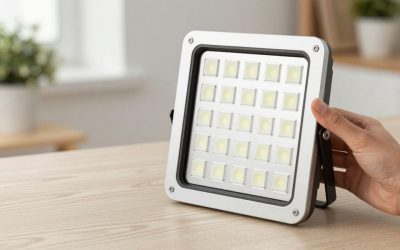
The Neewer CN-160 is one of the longest-running, most widely recommended budget on-camera LED panels, a flat panel design that predates many of the newer COB-style lights but remains a reliable, inexpensive fill light for camera-mounted use.
- 160-LED flat panel
- Dimmable brightness dial
- Battery or USB powered
Pros: Very inexpensive; simple dial control; widely available replacement batteries and diffusers.
Cons: Flat panel produces harsher light than COB-style lights; fixed color temperature on base model.
Buying Tips
- On-camera lights are best treated as fill or accent lighting, not a replacement for a proper key light in controlled setups.
- Bi-color on-camera lights adapt better across mixed indoor/outdoor shooting than fixed-temperature models.
- Weight matters a lot if the light will live on a gimbal — check it against your gimbal’s payload budget.
- Magnetic or cold-shoe mounting options add flexibility beyond just the camera’s hot shoe.
- For outdoor or adventure content, check a light’s weatherproofing rating specifically — most on-camera LEDs are designed for indoor use and will not survive rain or heavy moisture exposure the way a rated light like the Lume Cube does. A simple clip-on diffusion sheet or a sheet of inexpensive diffusion gel can noticeably soften a flat panel light’s output if you already own one and are not ready to upgrade to a COB-style design.
On-camera lights are inherently a compromise between portability and output — mounted directly on the camera, they create flatter, more direct lighting than a light positioned off to the side. For anything beyond quick run-and-gun shooting, even propping the same light on a small stand a few feet off-axis will noticeably improve the sense of depth in your footage. It is also worth thinking about battery runtime relative to shoot length for any on-camera light, since these compact lights generally use smaller batteries than full studio panels. A light rated for 60-90 minutes of continuous use is fine for short clips but can run out mid-session during a longer shoot, so carrying a spare battery or a USB power bank as backup is a cheap insurance policy worth budgeting for alongside the light itself. Heat output is a smaller but related consideration — compact on-camera LEDs run noticeably cooler than older halogen or tungsten lights, which matters if the light sits close to your hand or a subject’s face for extended periods.
FAQ
Is an on-camera light enough for indoor vlogging?
For casual, close-range vlogging it can work as a primary light, but for more polished setups it works best paired with ambient or secondary lighting.
Will an on-camera light drain my camera’s battery?
No — these lights use their own internal battery or separate power source, not the camera’s battery.
Can I mount an on-camera light on a gimbal rig?
Yes, as long as the light’s weight fits within your gimbal’s payload rating and mounting point options.
Is an on-camera light bright enough to use as a main light indoors?
For small rooms and close-up talking-head shots, often yes, but for larger rooms or group shots, an on-camera light usually works better as fill or backup rather than the sole light source.
Is a flat LED panel noticeably worse than a COB-style light for on-camera use?
COB-style lights generally produce softer, more even light due to their single larger emitting surface, but a flat panel with a diffusion sheet attached closes much of that gap for casual on-camera fill use.
Can an on-camera light run off the camera’s own battery or hot shoe power?
Most on-camera LEDs use their own internal battery rather than drawing power through the hot shoe, so they do not drain the camera’s battery, but it does mean managing a second battery alongside the camera’s.
Godox Litemons and Neewer’s mini panel cover practical, affordable fill lighting, while Aputure’s Amaran AL-M9 is the pick for filmmakers who want the smallest possible accent light.
Write Your Review
No reviews yet. Be the first to share your experience!