Lighting a small home studio — a spare bedroom, a corner of an office, a basement setup — comes with a specific constraint most lighting guides ignore: you don’t have the floor space for big light stands spread far apart, and cramming full-size gear into a tight room often makes the lighting look worse, not better. These three picks are chosen specifically for compact rooms where every light needs to earn its footprint.
Small rooms also create a secondary problem: reflective or close walls and ceilings can either help or hurt, depending on their color and distance. A white ceiling close overhead can be used as an improvised bounce source, effectively turning one light into a much softer, larger one for free. A dark or colored wall nearby, on the other hand, can introduce an unwanted color tint if a light is bounced or spilled onto it.
Godox SL60W LED Video Light
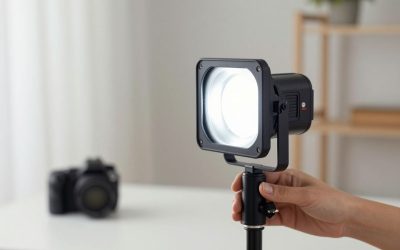
The SL60W is a continuous LED light built on the Bowens mount standard, meaning you can attach a wide range of softboxes, umbrellas, and modifiers to shape the light exactly how a small room needs — often bounced or diffused rather than aimed directly, to avoid harsh shadows in a tight space. It’s bright enough to be a genuine main light, not just a fill.
Pros: strong, continuous output, Bowens mount compatible with many modifiers, reliable color temperature. Cons: needs a separate softbox or diffuser purchased separately to get the most flattering light quality.
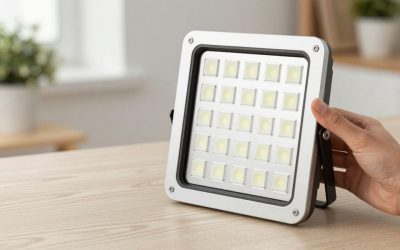
Neewer 660 LED Bi-Color Panel
A flat LED panel like the 660 takes up far less floor space than a traditional light-and-softbox combo, which matters when you’re working in a small room. Being bi-color means you can adjust the light from warm to cool to match your room’s existing lighting or your desired mood, without needing to swap color gels.
Pros: slim, low-footprint design, adjustable color temperature, budget-friendly for the output it provides. Cons: direct LED panel light can look harsh without a diffusion filter in front of it.
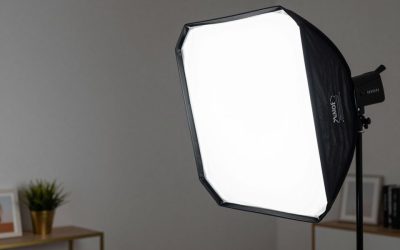
Neewer Softbox Lighting Kit (Two-Point Setup)
For a small studio, a compact two-softbox kit set at angles on either side of the camera gives much more even, flattering light than a single harsh source, and softboxes specifically are designed to diffuse and spread light so it doesn’t create the kind of hard shadows that make a small room look even smaller on camera.
Pros: genuinely even, soft light across the face, complete kit with stands included, good value for a full two-point setup. Cons: two stands still need floor space on either side of your filming position, which can be tight in very small rooms.
Neewer Wall-Mounting Boom Arm
For rooms where even two compact stands feel tight, mounting a light directly to the wall on a boom arm removes it from the floor plan entirely. The Neewer wall boom telescopes out to roughly a few feet, swivels through a wide angle range, and holds most lightweight panels or small softboxes using a standard 1/4-inch or 3/8-inch thread adapter — a practical fix for rooms too small for a traditional two-stand setup.
Pros: frees up all floor space on that side of the room, wide swivel range for angle adjustment, simple anchor-mount installation. Cons: requires drilling into a wall, which isn’t ideal for renters or rooms where that’s not an option.
Weight capacity is the detail most people overlook when combining a wall or ceiling mount with a floor stand. A wall boom typically holds a lighter panel light comfortably but will sag or feel unstable under a large softbox with a heavy modifier attached — check the arm’s rated maximum load against your actual light and modifier combined weight, not just the light alone, before committing to drilling anchor holes into a wall you can’t easily patch.
Buying tips: in a small room, bouncing light off a white ceiling or wall is often more useful than buying a bigger light, since direct hard light has nowhere to spread out and soften in a tight space. Measure your actual usable floor space before buying stands — a kit that looks compact in product photos can still need more than two feet of clearance on each side to set up properly.
If floor space is genuinely limited, consider mounting a single light overhead on a boom arm or wall bracket rather than adding a second floor stand. It’s a less common setup than the standard two-point lighting arrangement, but it frees up significant floor space while still providing a usable fill angle in a small room.
FAQ
Is one light enough for a small home studio?
One good key light with proper diffusion can work for basic talking-head content, but adding even a small second light to fill in shadows on the opposite side of the face noticeably improves most footage.
Do LED panels get hot in a small enclosed room?
LED lights run much cooler than older tungsten or fluorescent setups, so heat buildup in a small room is rarely a major issue, though several lights running for hours can still warm up a tightly closed space.
Should I paint my small studio room a specific color?
Neutral white or light gray walls are generally safest, since they reflect light evenly without tinting your footage; strongly colored walls can cast an unwanted color onto your face when light bounces off them.
Can I start with just one light and add more later?
Yes — starting with a single key light and adding a second fill light or panel once budget allows is a common and perfectly reasonable way to build up a small studio over time.
Is a wall-mounted boom arm safe to install in a rented apartment?
It requires drilling anchor holes, so check with a landlord first; renters who can’t drill are usually better served by a compact floor stand or a clamp-style mount that attaches to furniture instead.
How much weight can a typical wall boom arm safely hold?
Most lightweight wall booms are rated for a few pounds at full extension, which comfortably covers a single LED panel but not a large softbox with a heavy modifier — always check the manufacturer’s rated load before mounting anything heavier.
Write Your Review
No reviews yet. Be the first to share your experience!