Ring lights and key lights solve the same basic problem — making your face visible and evenly lit on camera — but they do it in visibly different ways, and the “best” choice really depends on the kind of content you make rather than which one is objectively superior. Here’s the honest breakdown of what each one actually does well, and where each one falls short.
The biggest visual difference is the catchlight — the reflection of the light source visible in your eyes on camera. A ring light produces a distinctive circular catchlight that’s become closely associated with beauty and close-up content; a key light produces a softer, more rectangular or window-like reflection that reads as more natural. Beyond aesthetics, color accuracy and consistency at different brightness levels tend to separate budget and premium options more than the light shape does.
Neewer 18-Inch Ring Light Kit (Ring Light Pick)
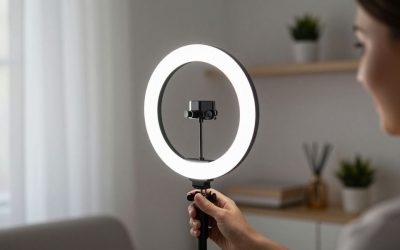
A ring light surrounds the camera lens with a circular light source, which produces the distinctive circular catchlight reflection in the eyes that’s become closely associated with beauty, makeup, and close-up talking-head content. The Neewer kit includes the ring itself, a stand, and a phone holder clipped in the center, making it a genuinely complete setup out of the box for under $80.
Pros: very affordable complete kit, flattering even light for close-up faces, distinctive catchlight some audiences expect. Cons: lower color accuracy than premium panel lights, and visible color shift when dimmed; less flattering for wider shots or multiple people.
Elgato Key Light (Key Light Pick)
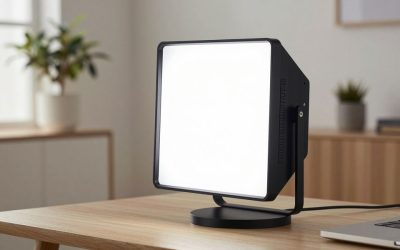
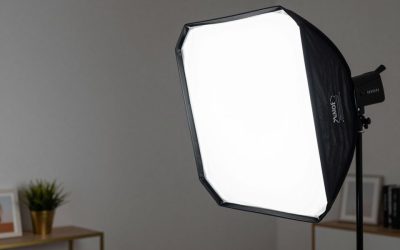
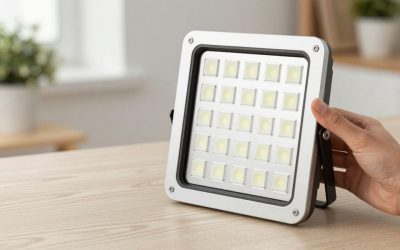
A key light produces a broader, more directional glow that mimics natural window light rather than a ring-shaped catchlight. The Elgato Key Light outputs significantly more brightness at a much higher color accuracy rating than typical ring lights, and stays color-consistent even as you dim it — a detail that matters a lot once you start editing footage and need lighting to look the same across takes.
Pros: high color accuracy and consistent output at all brightness levels, natural directional light that works for wider shots, app and Stream Deck integration for quick adjustments. Cons: no built-in catchlight effect, and it costs roughly three to five times more than a budget ring light.
Elgato Key Light Air (Budget Key Light Pick)
If the full-size Elgato Key Light is more than you want to spend but you still want key-light-style lighting rather than a ring’s catchlight, the Key Light Air is a smaller, lower-output version with the same app-controlled brightness and color temperature adjustment. It gives up some raw brightness compared to the full-size panel, but keeps the color consistency and natural directional feel that separates key lights from ring lights in the first place.
Pros: more affordable entry into Elgato’s key-light ecosystem, app-controlled and color-consistent when dimmed, compact enough for tighter desk setups. Cons: lower maximum brightness than the full-size Key Light, so it suits smaller rooms or closer camera distances better.
Software and app control is a detail worth weighing alongside the light shape itself. Elgato’s key lights integrate with Stream Deck and their Control Center app for quick one-tap brightness presets, which streamers who frequently switch lighting moods mid-stream tend to appreciate. Budget ring lights generally rely on a physical dial or basic remote instead — perfectly fine for a fixed setup, but noticeably less convenient if you’re adjusting lighting on the fly between different segments of a stream or shoot.
Verdict: if your content is close-up beauty, makeup, or talking-head videos where that circular eye reflection is part of the aesthetic, a ring light is the right tool and the Neewer kit is a genuinely good value. If you’re streaming, doing long-form video content, or anything where natural-looking, consistent, editable lighting matters more than a specific aesthetic, the Elgato Key Light is the better investment and will look more professional on camera for most content types.
It’s also worth considering your room’s existing light. A ring light tends to work well as a standalone solution in an otherwise dim room because of how much light it concentrates directly on the face. A key light generally performs best alongside some ambient room light or a second fill source, which is a small additional setup cost worth factoring in before committing to either option.
FAQ
Can I use both together?
Yes — many creators use a key light as their main light source and add a smaller ring light or fill light only for close-up segments, getting the benefits of both without relying on just one.
Which one is better for video calls and streaming specifically?
A key light generally looks more natural and professional on video calls and streams, since the directional light resembles how a well-lit office or studio actually looks, rather than the more stylized ring-light catchlight.
Does a cheaper ring light really look noticeably worse on camera?
The biggest giveaway is color shift when dimming — budget ring lights often shift slightly yellow or blue as brightness changes, which is visible on camera even if it’s subtle to the naked eye.
Do either of these work well for multiple people in frame?
Key lights generally scale better to multiple people since the broader, more even throw covers a wider area; ring lights are optimized for a single face close to the lens and lose their flattering effect quickly as the frame widens.
Is CRI (color rendering index) something I should actually pay attention to?
Yes — a higher CRI rating means colors, including skin tones, render more accurately on camera, and it’s one of the clearest technical reasons premium lights consistently look better than budget ones at the same brightness.
Is the Key Light Air a good compromise if I can’t decide between budget and premium?
It’s a reasonable middle ground specifically within the key-light category, trading some brightness for a lower price while keeping the color accuracy and app control that make key lights worth buying over a ring light in the first place.
Do app-controlled lights need a strong home Wi-Fi connection to work reliably?
They generally connect fine on typical home networks, though a very congested 2.4GHz network can occasionally cause lag when adjusting settings — a minor inconvenience rather than a dealbreaker for most setups.

Write Your Review
No reviews yet. Be the first to share your experience!